- RbcSepticServices
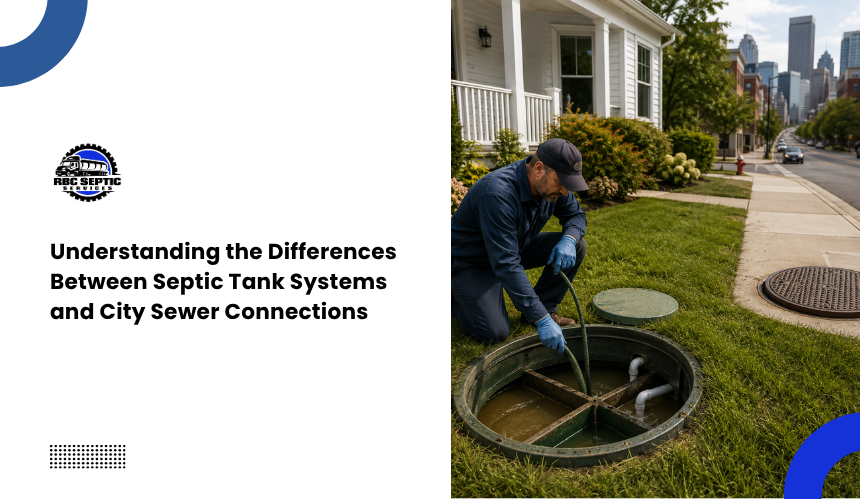
Understanding the Differences Between Septic Tank Systems and City Sewer Connections
Residential wastewater systems are designed to collect, transport, and process wastewater safely, but the way they handle this process can vary significantly depending on whether a property uses a septic tank or a municipal sewer connection.
When comparing septic tank vs city sewer, homeowners often evaluate differences in installation cost, long-term maintenance, repair responsibility, and overall property suitability before deciding which system better fits their needs.
A septic system uses onsite wastewater treatment, where wastewater is processed directly on the property through underground tanks and drain fields. In contrast, city sewer connection systems transport wastewater through municipal sewer systems connected to larger public sewer infrastructure managed by local authorities.
Both systems have advantages and limitations related to septic system costs, sewer utility fees, maintenance responsibilities, and long-term property drainage systems. Understanding how these systems differ helps property owners evaluate septic tank maintenance requirements, sewer line installation expenses, septic repair costs, and the expected septic system lifespan associated with each option.
1. Advantages and Disadvantages of Septic Tank Systems
Septic systems are commonly used in properties where municipal sewer systems are unavailable or impractical to connect. Because onsite wastewater treatment happens directly on the property, homeowners manage both the operation and maintenance of the entire system themselves.
Pros of septic tank systems
- No Monthly Sewer Utility Fees: Septic systems operate independently from city sewer connection billing and recurring municipal wastewater charges.
- Greater System Independence: Homeowners are not dependent on public sewer infrastructure or municipal treatment facilities.
- Useful for Rural Properties: Septic systems often work better in areas where sewer line installation access is unavailable.
- Long Septic System Lifespan: Proper septic tank maintenance and regular septic inspection services can help systems function for decades.
- Reduced Strain on Municipal Sewer Systems: Onsite wastewater treatment keeps wastewater processing directly on the property instead of relying on city-managed infrastructure.
Cons of septic tank systems
- Regular Septic Tank Pumping Required: Waste buildup inside the tank requires periodic removal to maintain proper operation.
- Higher Owner Responsibility: Homeowners must manage septic tank maintenance, inspections, and overall system performance themselves.
- Potential Septic Repair Costs: Drain field failures, underground tank damage, and property drainage systems problems can become expensive over time.
- Soil Conditions Affect Performance: Poor soil absorption may reduce wastewater treatment efficiency and increase maintenance concerns.
- Installation Limitations: Some properties may not have enough space or proper environmental conditions for septic installation.
2. Advantages and Disadvantages of City Sewer Systems
City sewer systems connect residential properties to larger municipal sewer systems that transport wastewater through public sewer infrastructure for centralized treatment. Unlike septic systems, wastewater is managed primarily by the municipality rather than directly by the homeowner.
Many urban and suburban properties rely on city sewer connection systems because they reduce direct wastewater management responsibilities for the property owner. However, they also introduce recurring service costs and dependence on municipal infrastructure.
Pros of city sewer systems
- Less Direct Maintenance Responsibility: Municipal sewer systems handle large-scale wastewater treatment and infrastructure management.
- No Septic Tank Pumping Needed: Homeowners do not need regular pumping or onsite wastewater treatment management.
- Better for Dense Urban Areas: Sewer infrastructure supports larger populations more efficiently than individual septic systems.
- Reduced Risk of Drain Field Problems: City sewer connections eliminate drain field maintenance concerns associated with septic systems.
- Simplified Residential Wastewater Management: Many homeowners prefer avoiding direct septic tank maintenance responsibilities.
Cons of city sewer systems
- Recurring Sewer Utility Fees: Monthly or quarterly wastewater charges continue throughout property ownership.
- Dependence on Municipal Infrastructure: Sewer service disruptions or city sewer problems may affect multiple connected properties.
- Private Sewer Line Installation Responsibility: Homeowners may still be responsible for repairs affecting private sewer lines on the property.
- Potential Sewer Infrastructure Failures: Aging municipal systems can still experience blockages, backups, or infrastructure damage.
- Limited Availability in Rural Areas: Some properties do not have practical access to city sewer connection networks.
3. How Septic System Costs and Sewer Costs Compare Long Term
Long-term ownership expenses can vary significantly depending on whether a property uses a septic system or a city sewer connection. While septic systems may avoid recurring monthly sewer charges, they often involve periodic pumping, inspections, and potential repair costs over time. Municipal sewer systems typically reduce direct maintenance involvement but introduce recurring sewer utility fees and possible sewer line repair expenses.
Comparing septic system costs and city sewer expenses requires looking beyond initial installation alone and considering long-term maintenance, repair responsibility, and operational costs associated with each residential wastewater system.
How septic ownership creates periodic maintenance expenses
Septic systems usually require ongoing septic tank maintenance throughout the life of the property. Septic tank pumping is commonly needed every few years depending on household usage, tank size, and system condition.
Homeowners may also face septic repair costs involving drain fields, tank damage, or onsite wastewater treatment components if the system is not maintained properly over time. Regular septic inspection services are often recommended to help reduce the risk of larger repair problems developing later.
Why city sewer systems create recurring utility costs
Properties connected to municipal sewer systems typically pay ongoing sewer utility fees as part of monthly or quarterly wastewater service billing. These charges help fund public sewer infrastructure maintenance, wastewater treatment facilities, and municipal system operation.
Although homeowners generally avoid septic pumping expenses, long-term sewer service costs may continue indefinitely throughout property ownership.
How installation costs differ between both systems
The cost of sewer line installation and septic installation can vary widely depending on property location, soil conditions, distance from municipal infrastructure, and local regulations. Rural properties without nearby sewer infrastructure often rely on septic systems because city sewer connection access may not be available or financially practical.
In more developed urban areas, municipal sewer systems are often already integrated into the surrounding property drainage systems, making sewer connection more accessible during construction or renovation projects.
4. What Property Factors Influence the Better Choice
The better option between septic tank vs city sewer often depends on the location, layout, and infrastructure surrounding the property. Factors such as land size, population density, local sewer access, soil conditions, and long-term property development plans all influence which residential wastewater systems are more practical for a specific property.
Because every property handles wastewater differently, the ideal system usually depends on both environmental conditions and long-term ownership goals.
Why rural properties often rely on septic systems
Many rural properties are located far from municipal sewer systems and public sewer infrastructure, making city sewer connection unavailable or too expensive to install. In these areas, onsite wastewater treatment through septic systems is often the most practical wastewater management solution.
Larger rural lots may also provide more space for drain fields and septic installation requirements needed for proper wastewater filtration and property drainage systems.
How urban areas are better suited for city sewer connections
Urban and densely populated areas usually depend more heavily on municipal sewer systems because centralized wastewater treatment supports larger populations more efficiently. Existing sewer infrastructure in developed neighborhoods often makes sewer line installation and city sewer connection access easier for residential properties.
City sewer systems may also reduce the amount of land required for wastewater treatment compared to onsite septic system layouts.
Frequently Asked Questions
Which system usually lasts longer: septic or city sewer?
A properly maintained septic system lifespan can extend for several decades, especially when regular septic tank maintenance and septic inspection services are performed consistently. Municipal sewer systems may also last long term, but the condition of private sewer line installation still affects overall durability.
How often does a septic tank need pumping?
Septic tank pumping frequency depends on household size, water usage, and tank capacity. Many residential wastewater systems require pumping every few years to prevent overflow and reduce long-term septic repair costs.
Are sewer utility fees usually included in water bills?
In many municipalities, sewer utility fees are combined with monthly water service billing. These charges help fund municipal sewer systems, wastewater treatment operations, and ongoing sewer infrastructure maintenance.
Can septic systems fail if they are not maintained properly?
Poor septic tank maintenance may eventually cause drain field problems, wastewater backup, soil contamination, and costly septic repair costs. Regular inspections and pumping help support safer onsite wastewater treatment performance over time.
Why are septic systems more common in rural areas?
Many rural properties do not have direct access to city sewer connection infrastructure. Because extending municipal sewer systems into remote locations is often expensive, septic systems become the more practical wastewater solution for those properties.